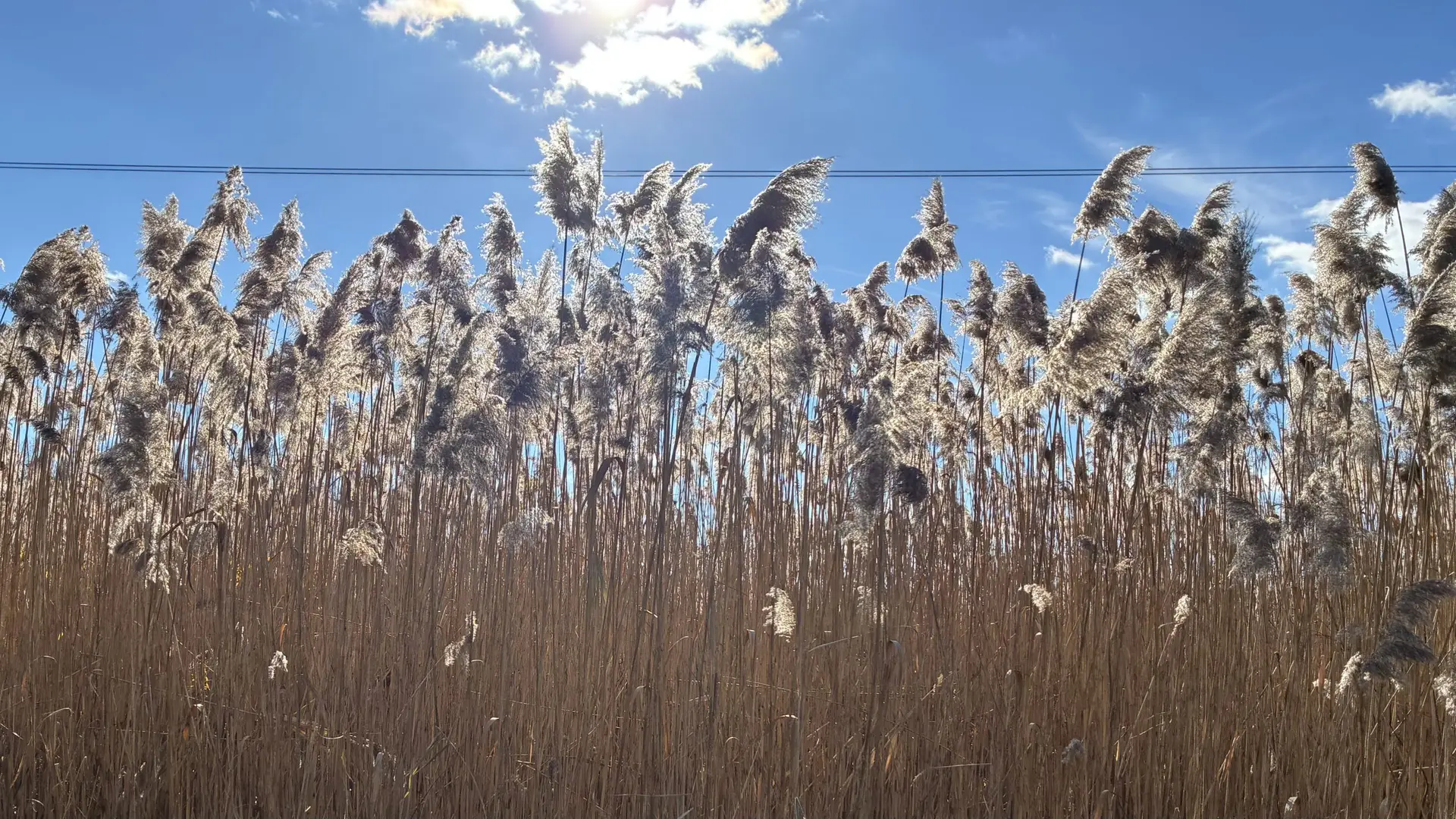
Common Reed: The Powerful Control Invasive Species Can Have Over Landscapes
Clare Pugh
Invasive species are a major driver of landscape change in Michigan. Without natural predators or ecological checks, invasive plant species can outcompete native plants for light, water, and nutrients. Some invasive species are able to establish very densely, crowding out other plant species and drastically changing the environment and ecosystem. One of the most prevalent examples of this in Michigan is the European Phragmites australis, or common reed.
Common reed is an aquatic plant that has spread throughout Michigan in wetlands, ditches, and along lakeshores. It can grow more than 15 feet tall and establishes large, dense stands that can be nearly impossible to walk through. Common reed outcompetes and crowds out native aquatic plant species like cattails and sedges.
Efforts to manage common reed are ongoing across Michigan, with several programs working to reduce its spread at a landscape scale. Management techniques include methods such as prescribed burns, herbicides, and manual cutting. These methods can be effective with ongoing management on a small scale. However, challenges in efficacy arise with larger established populations in the landscape. The Phragmites Adaptive Management Framework, or PAMF, is an initiative designed to determine the best management methods for landowners. PAMF enables both private and public landowners to participate in research projects and get management strategies specific to their land. Nearby Stony Creek Metropark is among the sites currently participating in this program.
To find out more, visit the Great Lakes Phragmites Collaborative website below!