Zebra and quagga mussels are two of the most damaging invasive species in Michigan. Both of these mussels are freshwater shellfish species that are invasive to the United States and have greatly impacted Michigan lakes.
Both the zebra and quagga mussels originated from eastern Europe. The quagga mussel is native to Ukraine and the zebra mussel is native to southeast Russia, residing in the Black and Caspian Seas. In the 1980s, populations of both the zebra and quagga mussels were first discovered in the Great Lakes of Michigan. It was suspected that these mussels were introduced from the ballast water of transoceanic ships. Since their introduction to the Michigan Great Lakes, these species have rapidly spread in not only the Great Lakes but also in other bodies of water in Michigan. By 2010, zebra mussels were reported in 255 Michigan inland lakes and 17 rivers and streams in the state. [1]
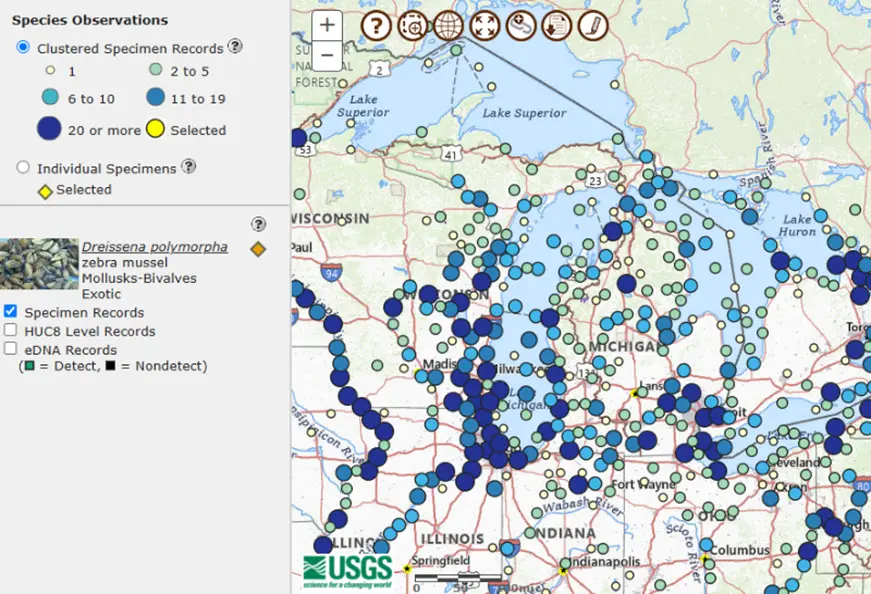
USGS Map of Zebra Mussels - Click button for interactive map
Recreational boating can be a source of transit for both the zebra and quagga mussels. It is presumed that recreational boating is a large contributor to species spread. [2] Since they can attach very quickly and survive outside of water for several days, boaters can unknowingly transport these species when they remove their boat from the water at a launch site and relaunch elsewhere.
One of the most effective techniques of invasive mussel management is to remember “Clean, Drain, Dry” when at the boat launch. The three steps of “Clean, Drain, Dry” are:
- Clean your boat or watercraft after each use.
- Drain the water out of your boat at the boat ramp when you pull it out of the water. (This includes live wells, etc.)
- Allow your boat or watercraft to dry for 5 days before launching in a different area.
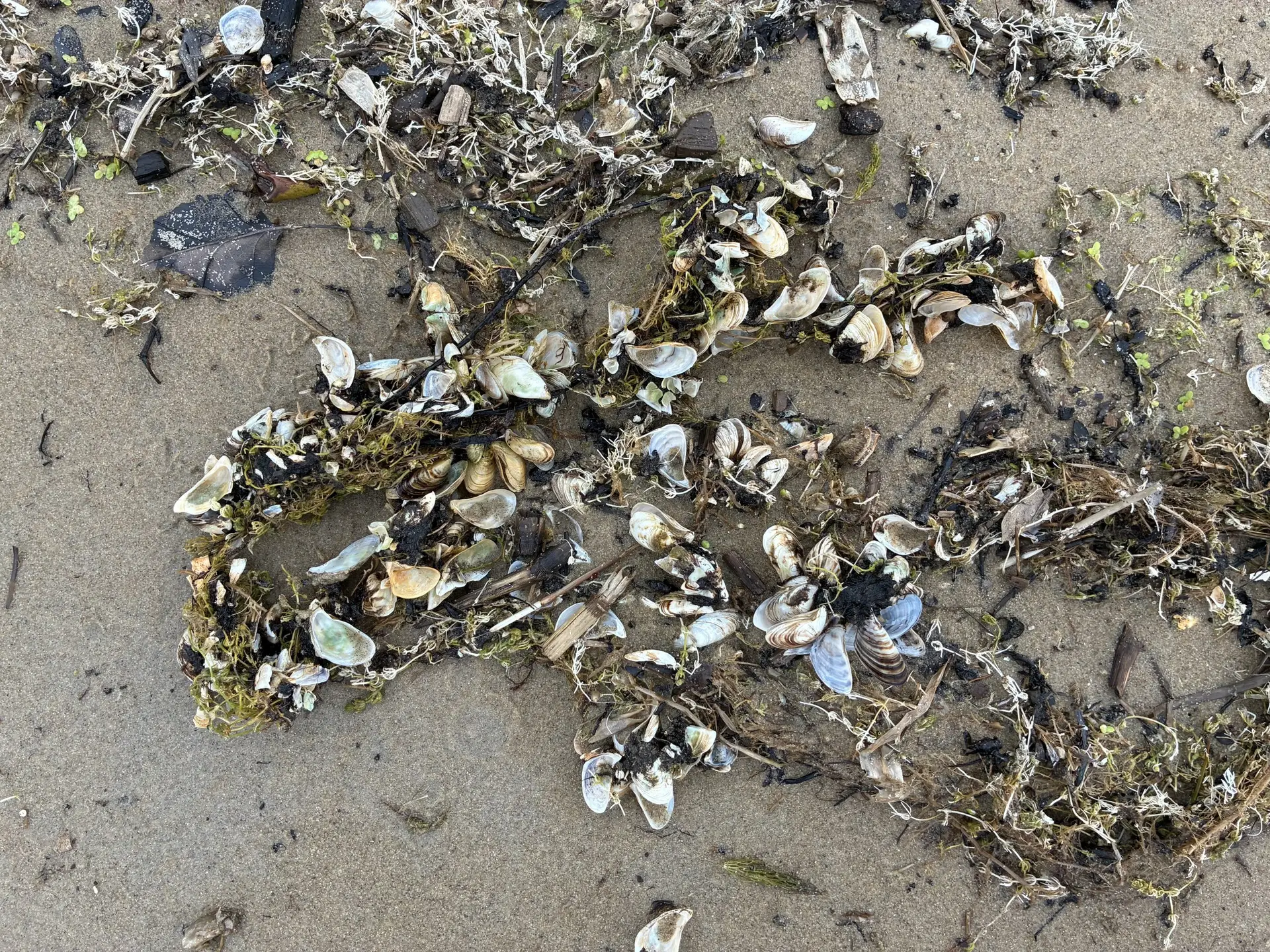
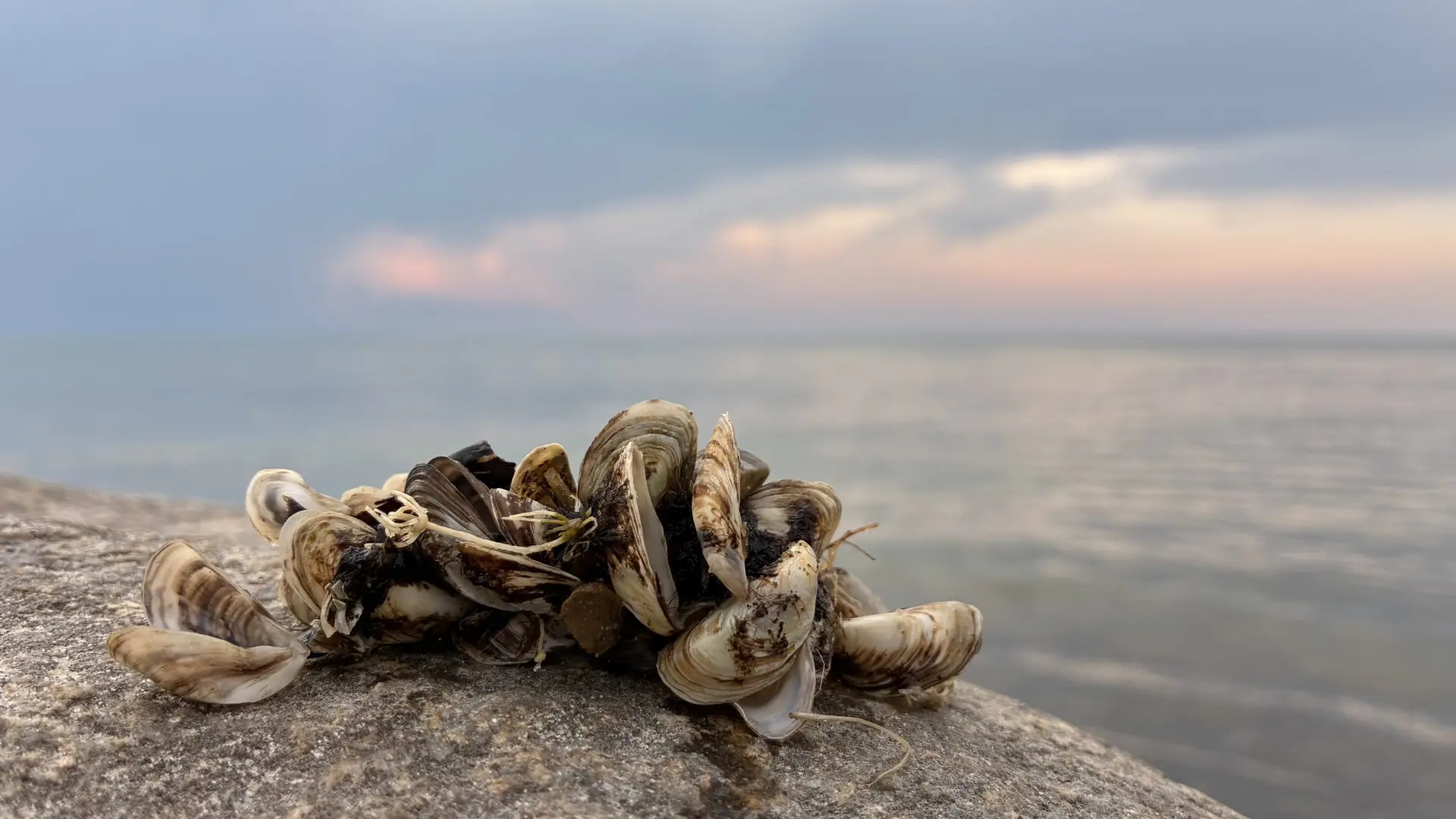
Dead Zebra Mussels Washed up on Lake Huron Beach
Why does it matter?
Zebra and quagga mussels have a gigantic economic impact in the state of Michigan due to biofouling – accumulation on ships and underwater structures. This includes intake and drainpipes of power plants, public water supply facilities, and industrial facilities. These mussels can additionally damage boats, docks and fishing gear. It is estimated that the management of zebra and quagga mussels in the Great Lakes costs over 500 million dollars each year. [2]
Both mussel species are filter feeders, so in great abundance, they can filter the water ecosystem more than native mussel species, leading to a change in the ecosystem. Zebra and quagga mussels reduce the levels of phytoplankton, zooplankton and other water particles, increasing water transparency. This affects plant growth and native species dominance. [3] They also can outcompete native mussel species, sometimes growing directly on them, leading to the death of native mussel species.
In addition to the economic and environmental harm, it is illegal to transport zebra or quagga mussels in Michigan. The State of Michigan has passed legislation aimed at Michigan boaters to control invasive species. Michigan currently has a law that prohibits the transportation of invasive species on public roadways or the launching of boats in Michigan waters with aquatic plants attached according to Michigan’s Natural Resources and Environmental Protection Act (Act 451 of 1994) Part 413. This law was strengthened in 2019 to include the current requirement for boat owners. [4]
Next time you are at the boat launch, remember “Clean, Drain, Dry!”