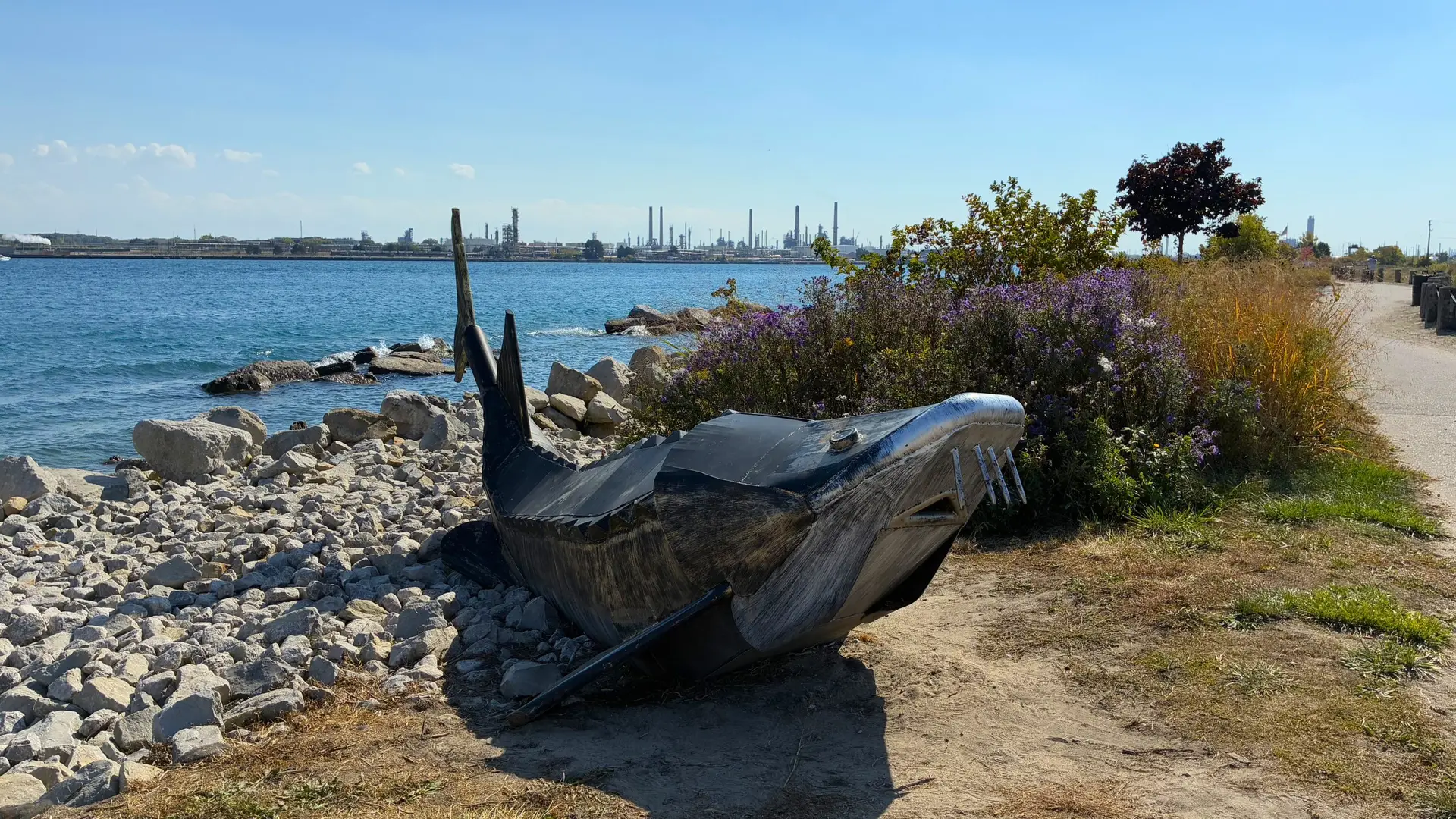
The nearby St. Clair River connects Lake Huron and Lake St. Clair, linking the upper and lower Great Lakes. This is an important area for both fish spawning and migration.
The river serves as critical habitat for native fish like lake sturgeon, lake whitefish, and northern madtom. Its wetlands, tributaries and rocky reefs provide key spawning grounds and nursery areas for young fish.
However, industrial development, dredging, and dumping changed the shoreline and reefs, significantly degrading these habitats. As a result, native fish populations declined and the overall river health suffered.
In 1987, the St. Clair River was deemed an Area of Concern under the Great Lakes Water Quality Agreement between the United States and Canada. In response, the United States and Canada have made a combined effort to improve water quality and restore habitats for fish and wildlife.
Between 2012 and 2014, large habitat restorations on the United States shoreline took place, funded by $21 million from the Great Lakes Restoration Initiative (GLRI). These efforts included reconnecting wetlands, replacing concrete shorelines with natural shorelines and rebuilding reefs for spawning.
These actions aimed to promote fish reproduction and survival by increasing habitat complexity and connectivity. Early monitoring has shown positive results with rebounding fish populations in restored areas.
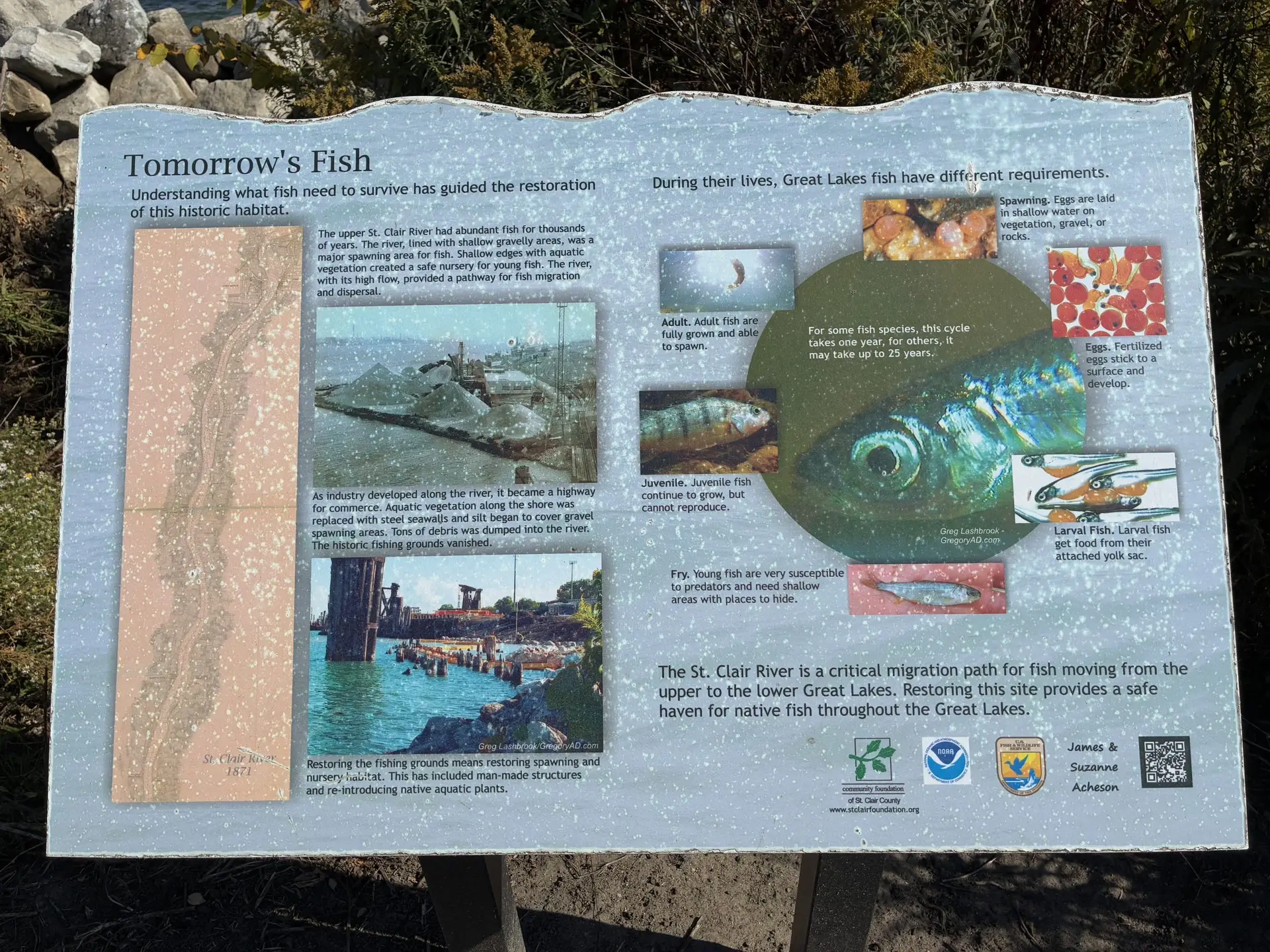
Sign on the Blue Water River Walk in Port Huron
The implications of these habitat restoration efforts extend beyond fish populations. Healthy fish populations support commercial and recreational fishing, contribute to nutrient cycling, and help maintain ecosystem balance. Continued habitat restoration is needed to preserve biodiversity, improve water quality and ensure the long-term environmental and economic health of the Great Lakes.
For references and more information, check out the below links:
US Environmental Protection Agency – St. Clair River AOC