The invasive spotted lanternfly has reached Macomb County. Here is what to know if you see one.
The spotted lanternfly is an insect native to eastern Asia. It was first found in the United States in 2014 in Pennsylvania. Since then, it has spread to 18 states, including Michigan. The spotted lanternfly was first found in Oakland County in 2022. It has now been found in 5 Michigan counties, including Lenawee, Macomb, Monroe, Oakland, and Wayne counties.

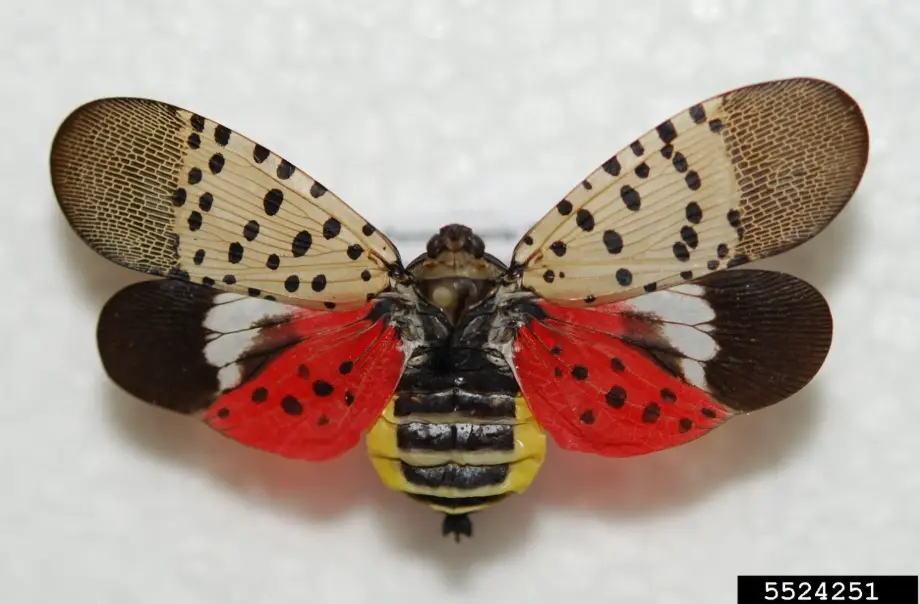
Spotted Lanternfly Wings | Lawrence Barringer, Pennsylvania Dept. of Agriculture, Bugwood.org
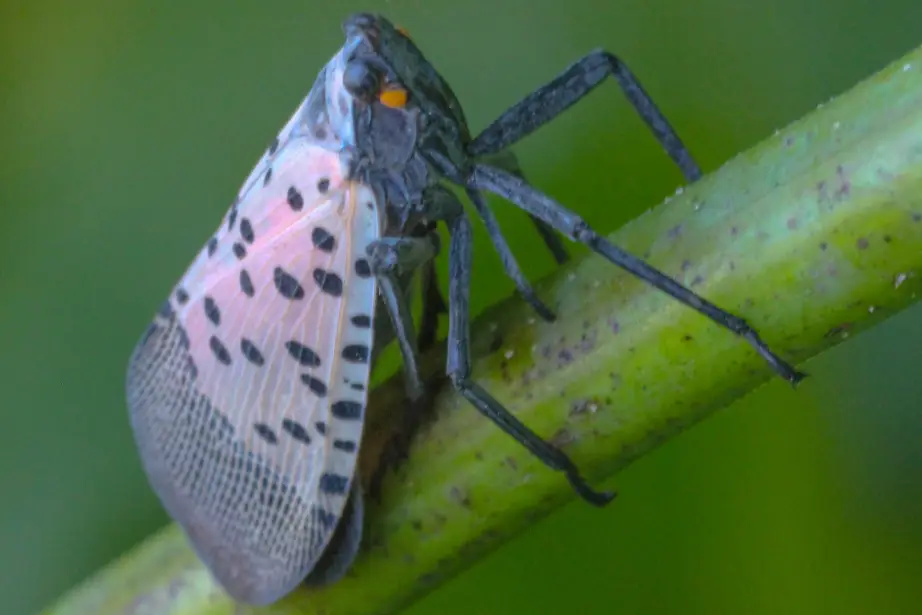
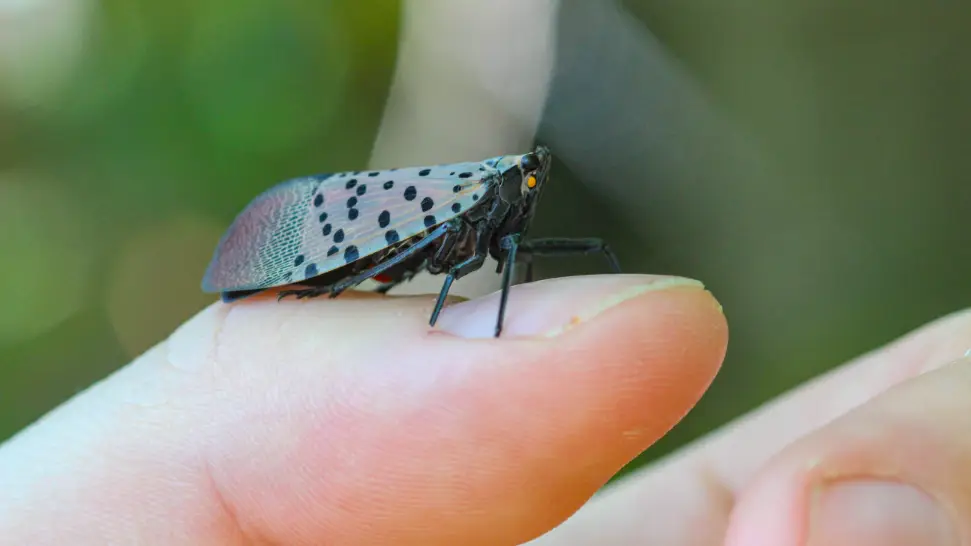
Adult Spotted Lanternfly | Deb McCullough, MSU
This insect does not sting or bite and poses no danger to people or pets. It does, however, threaten specialty crops including cherries, grapes, apples, hops, and many hardwood tree species. The exact impact of its establishment is unknown, but it can proliferate very quickly, raising concerns about local trees and crop harvests.
The spotted lanternfly does not frequently fly very long distances, but is an excellent hitchhiker. It is presumed that most new populations have been established by the bug “hitchhiking” on nursery stock, vehicles, etc. Be aware of these insects in all life stages when traveling in areas where they are established.

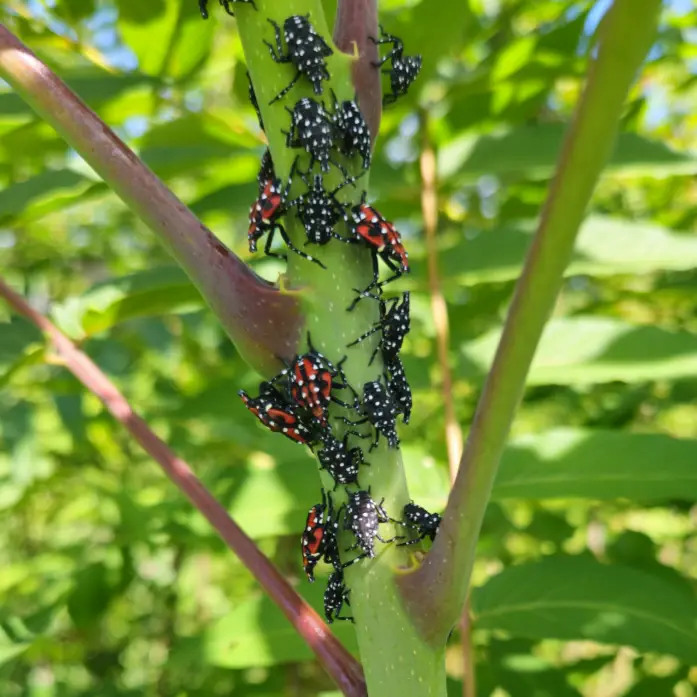
Spotted Lanternfly Nymphs | Tim Harrison, MSU
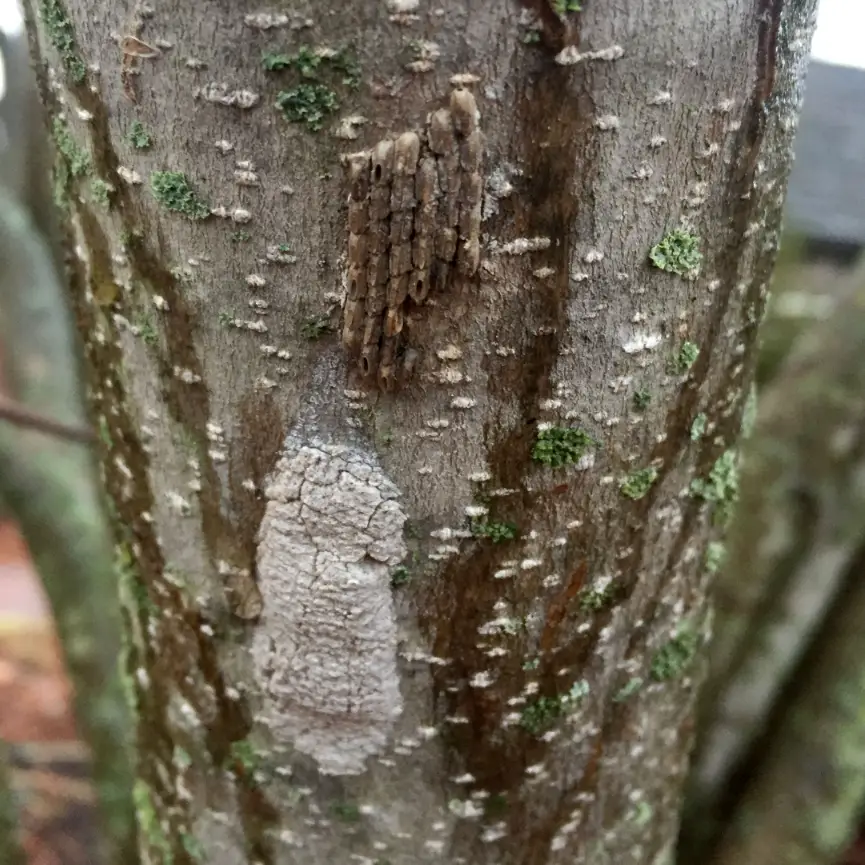
Spotted Lanternfly Eggs | Emelie Swackhamer, Penn State University, Bugwood.org
If you see a spotted lanternfly in a county that does not yet have established populations, you can report the sighting online. All you need to do is take a picture and note your location. The reporting tool can be opened by clicking below.
To manage a population of spotted lanternflies on your property, it is recommended that you contact an arborist who is a certified pesticide applicator to treat your tree(s).
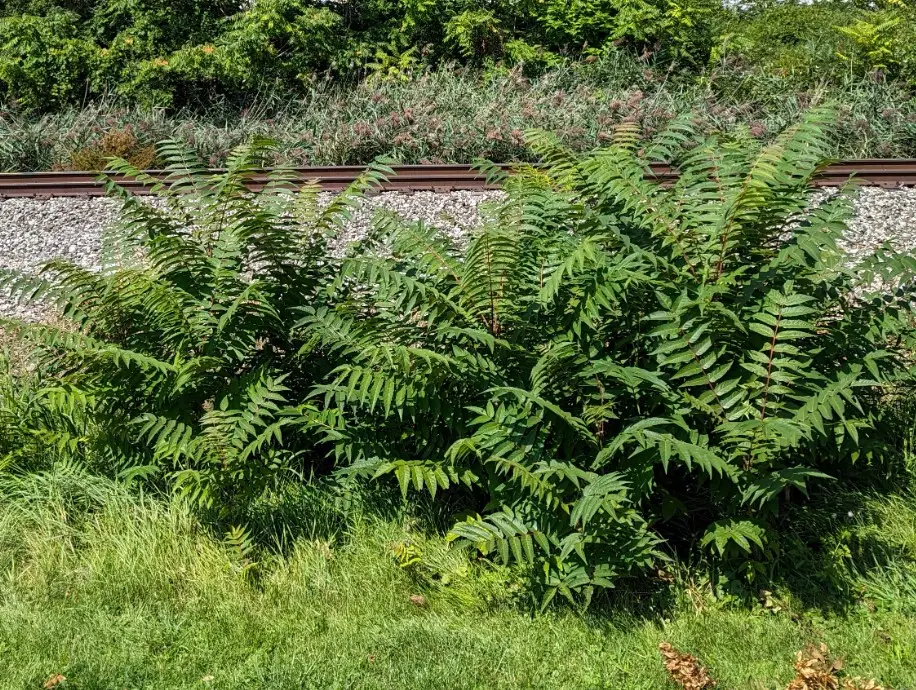
The spotted lanternfly will use many tree species as a host, but has a special preference towards the also invasive tree-of-heaven. Tree-of-heavens are often misidentified as black walnuts or staghorn sumac due to the similarity of the leaves. Removing these invasive trees can reduce your chances of having spotted lanternflies on your property. Since these trees can be difficult to remove, it is recommended that you contact an arborist and/or use a herbicide after removal.

Young Tree-of-Heaven | Deb McCullough, MSU
For more information, check out the link below.
Spotted Lanternfly – A Guide for Homeowners and Residents in Michigan
All images are taken from: Spotted Lanternfly – A Guide for Homeowners and Residents in Michigan by Tim Harrison, Nathaniel Walton and Deborah McCullough of Michigan State University.